

Cart
0
Diwali kitchens run on oil. Chakli, murukku, shankarpali, karanji, besan laddoo, mysore pak – the list is long, and the oil you choose decides both the taste and how your family feels after a week of festive eating.
Groundnut oil: the frying favourite
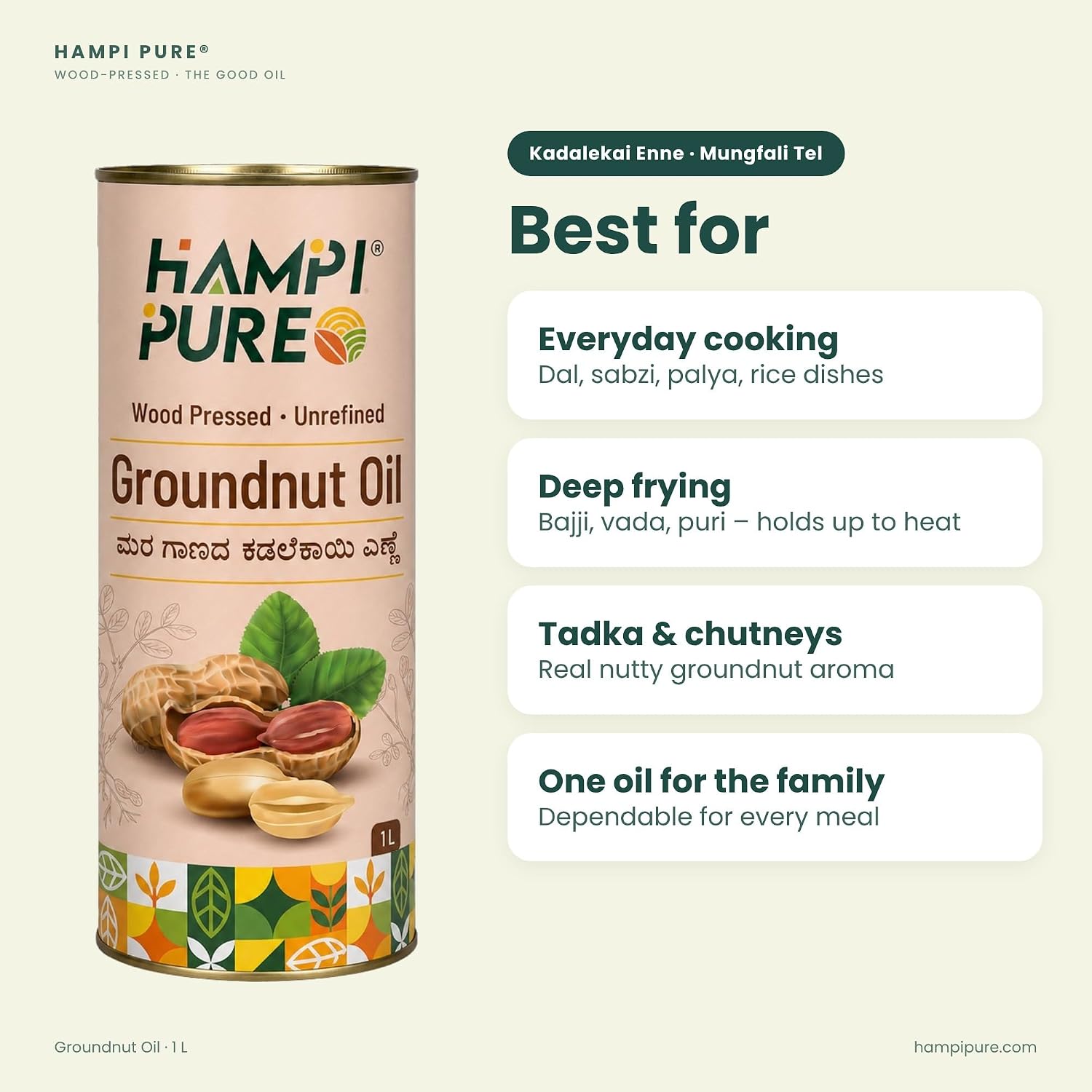
Wood-pressed groundnut oil is the classic choice for deep-fried snacks. It holds up well to high heat, gives a clean crunch and adds a light nutty flavour that suits chakli, murukku, sev and namak pare. A 5 litre pack is usually the best value for the festive season.
Coconut oil: for Kerala and coastal treats
Banana chips, unniyappam and achappam taste best in coconut oil. Its natural sweetness carries through, and it is very stable at frying temperature.
Sesame oil: for traditional sweets and lamps
In many South Indian homes, gingelly (sesame) oil is used for adhirasam and for lighting the diyas. It has a gentle flavour and natural antioxidants that make it one of the most stable oils.
Ghee or oil for sweets?
Many sweets like laddoo and halwa are traditionally made with ghee. For fried sweets like karanji or chirote, a neutral, heat-stable oil like groundnut works well and keeps the cost down.
Frying tips for festive batches
- Get the temperature right: drop a small piece of dough in – it should rise steadily, not sink or burn.
- Fry in small batches so the oil temperature does not drop.
- Drain well on a steel strainer or paper.
- Don’t keep reusing the same oil through the whole week. Strain it and use it once more for a sabzi, then discard.
Why unrefined oil matters during festivals
Festive cooking means more oil than usual. Choosing an unrefined, wood-pressed oil – made without chemicals, bleaching or deodorising – is a simple way to make that extra oil a better one. Wishing your family a happy and healthy Diwali.


