

Cart
0
No single food protects or harms the heart on its own. What matters is the overall pattern of what we eat and how we live. In the kitchen, a few simple habits around oil make a real difference.
This article is general information, not medical advice. If you have a heart condition, follow your doctor’s guidance.
1. Choose the right kinds of fat
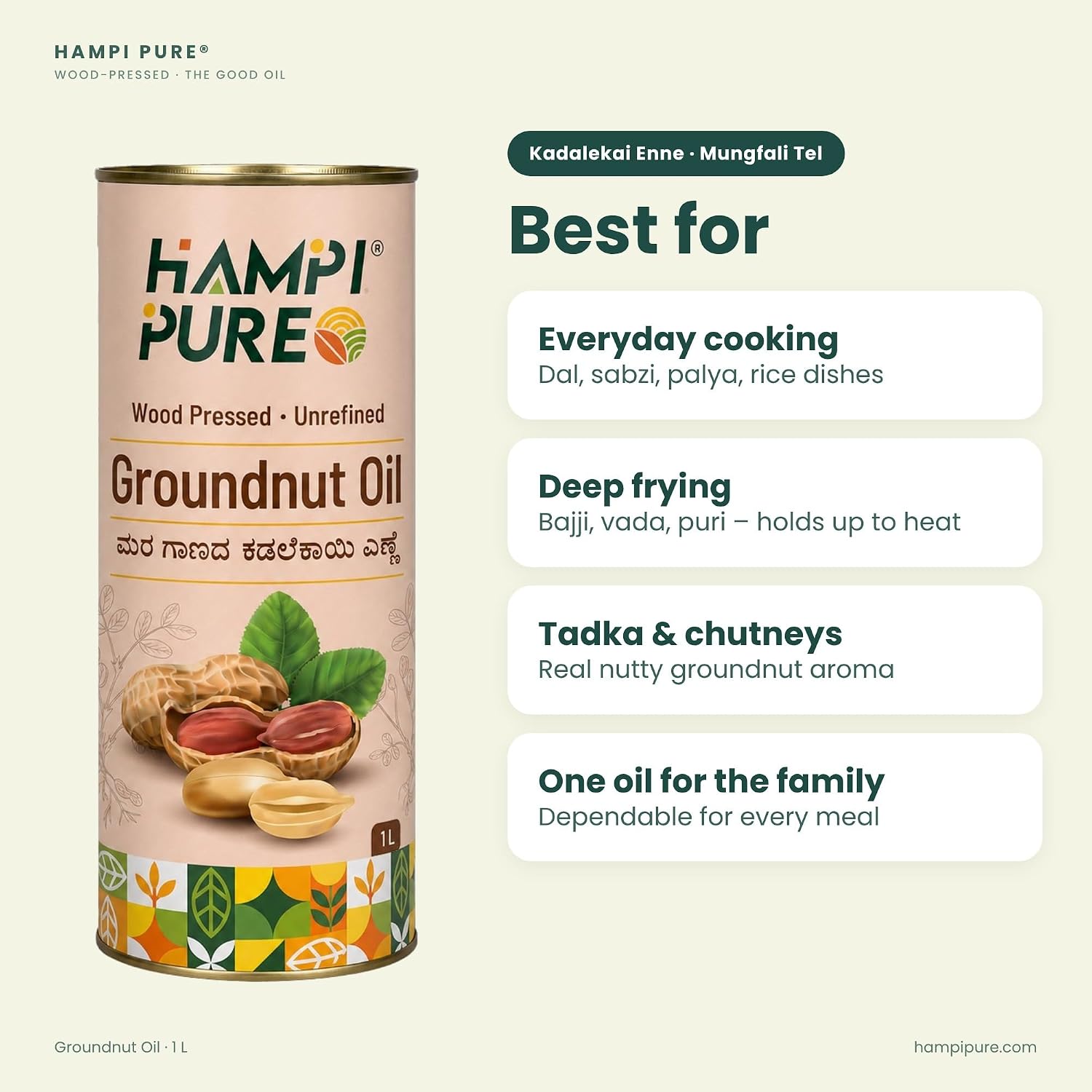
- MUFA-rich oils like groundnut and mustard are widely considered heart-friendly when used in moderation.
- Omega-3 sources: kachi ghani mustard oil contains plant omega-3 (ALA); flaxseed oil is rich in it, used raw.
- Limit trans fats: avoid vanaspati and repeatedly reheated oil.
2. Use less, measure more
Use a spoon instead of pouring from the bottle. See how much oil a family needs.
3. Prefer unrefined oils
Unrefined, wood-pressed oils keep their natural vitamin E and antioxidants and are made without chemical solvents.
4. Cook smarter
- Steam, roast, grill or sauté more often than deep frying.
- Don’t reuse frying oil again and again.
- Add flavour with spices, herbs, lemon and tadka instead of extra oil.
5. Rotate oils
Using two or three oils through the month gives a wider mix of fats. Read our oil rotation plan.
6. Look beyond oil
More vegetables, pulses and whole grains, less salt and sugar, regular activity and regular health check-ups matter as much as the oil you choose.
See our heart-friendly oil pick.


