

Cart
0
Good oil can go bad quickly if it is stored badly. Indian kitchens are hot, bright and busy – three conditions that speed up rancidity. A few simple habits make a big difference.
The three enemies of oil
- Heat: keeps oil reactions going faster.
- Light: especially sunlight, breaks down natural antioxidants.
- Air: oxygen slowly oxidises oil.
Storage habits that work
- Keep oil away from the stove. A cupboard on the far side of the kitchen is better than the shelf next to the burner.
- Keep it out of sunlight. Tins and dark bottles protect oil better than clear plastic.
- Close the cap every time.
- Decant into a small daily-use bottle from the big tin or jar, and keep the large container sealed.
- Use a clean, dry ladle. Water or food bits in oil speed spoilage.
How long does unrefined oil last?
Most unrefined oils are best used within about 12 months of packing. Once opened, use within a few months for the best flavour. Oils rich in omega-3, like flaxseed and walnut, are more delicate – keep them in the fridge after opening.
Signs your oil has gone rancid
- A sharp, paint-like or stale smell
- A bitter or soapy taste
- Very sticky residue on the bottle
If in doubt, throw it out.
Is sediment a problem?
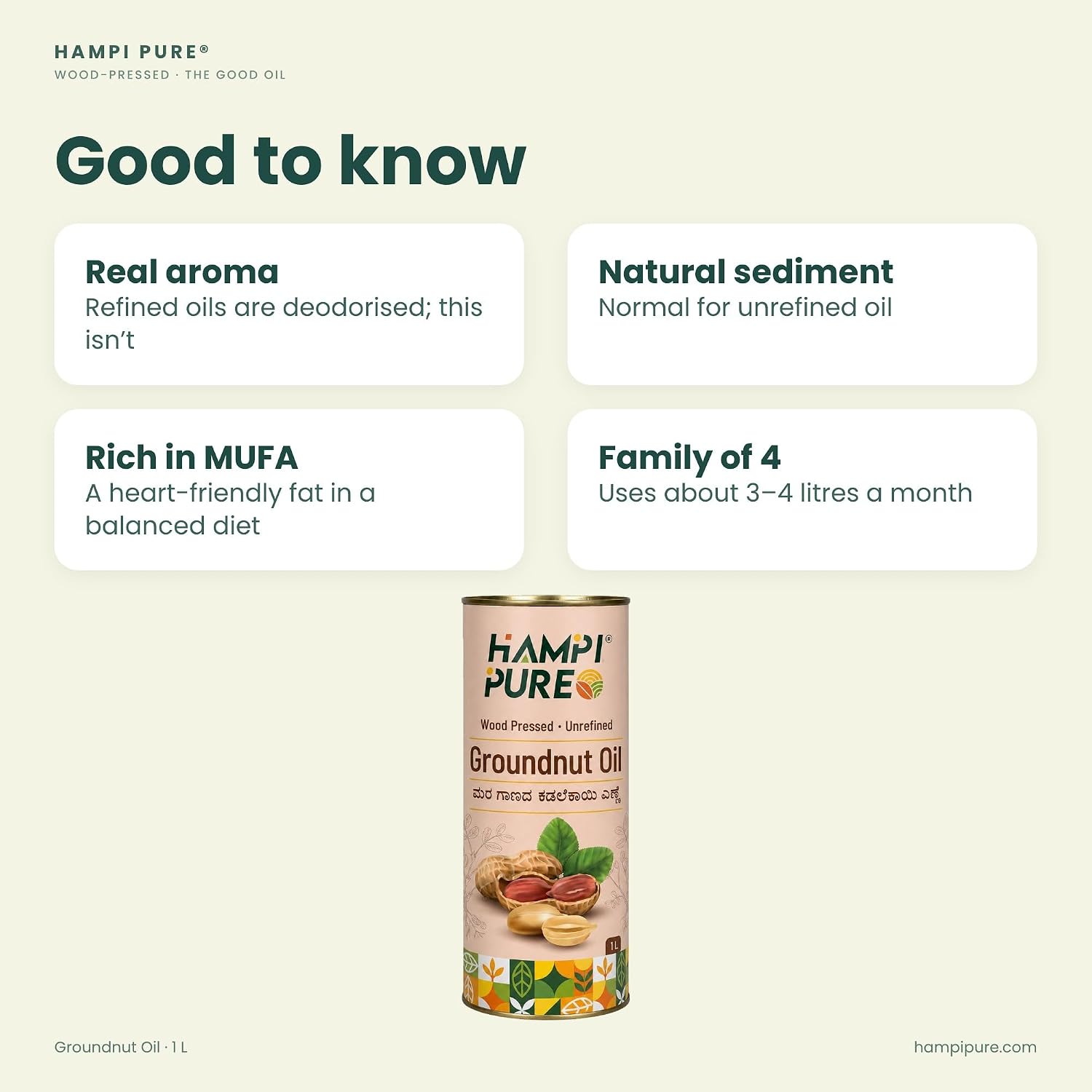
No. A thin layer of natural sediment at the bottom of wood-pressed oil is normal. Coconut oil turning solid in cold weather is also normal.
Buy the right size
Buy only as much as your family uses in a couple of months. A family of four uses about 3–4 litres a month – so a 5 litre pack is used up well before it ages.


