

Cart
0
Oil adulteration – mixing an expensive oil with cheaper oil or other substances – is a known problem. Home tests cannot replace a laboratory, but they can raise a red flag.
1. The fridge test
- Coconut oil: pure coconut oil turns fully solid and white in the fridge within an hour or two. If a liquid layer stays on top, it may be mixed.
- For other oils, the fridge test is not reliable on its own – many pure oils go cloudy in the cold.
2. The smell and taste test
- Wood-pressed groundnut oil should smell of peanuts.
- Kachi ghani mustard oil should be sharp enough to sting the nose.
- Sesame oil should have a gentle nutty smell.
- Oil that smells of nothing has probably been refined or blended.
3. Colour and sediment
Unrefined oils have natural colour and may show a little sediment. Crystal-clear, colourless oil sold as “wood-pressed” is worth questioning.
4. The price test
Traditional pressing yields less oil from the same seeds. If a “wood-pressed” oil costs the same as refined oil, ask how.
5. Check the label
- An FSSAI licence number
- The seed named clearly, with nothing else in the ingredients
- Blended oils must say “blended” and list proportions
- Packing date and best-before
The limits of home tests
Some adulterants can only be detected in a lab. The best protection is to buy from brands that are transparent about how and where their oil is made.
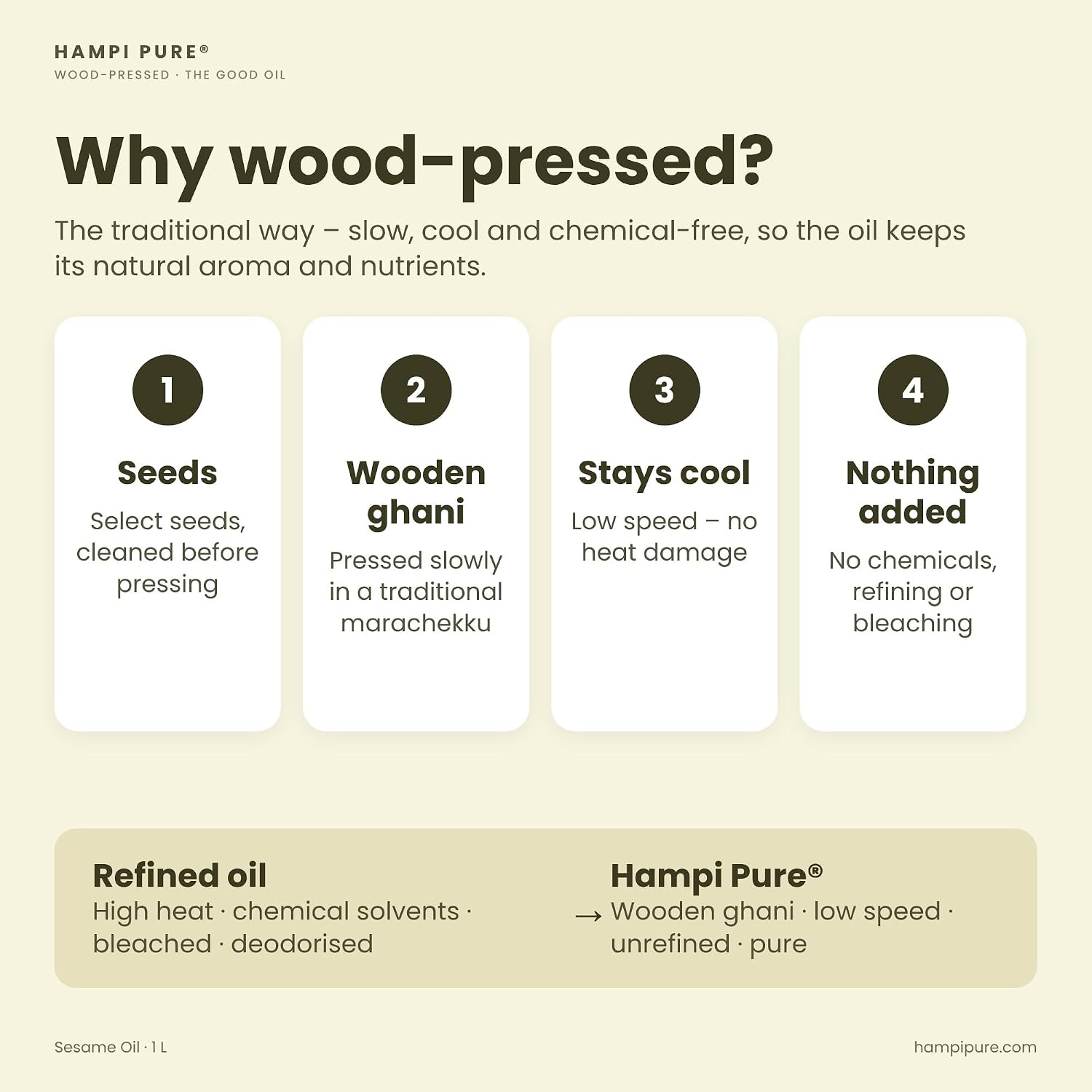
All Hampi Pure® oils are single-seed, wood-pressed and unrefined. See the range.


