

Cart
0
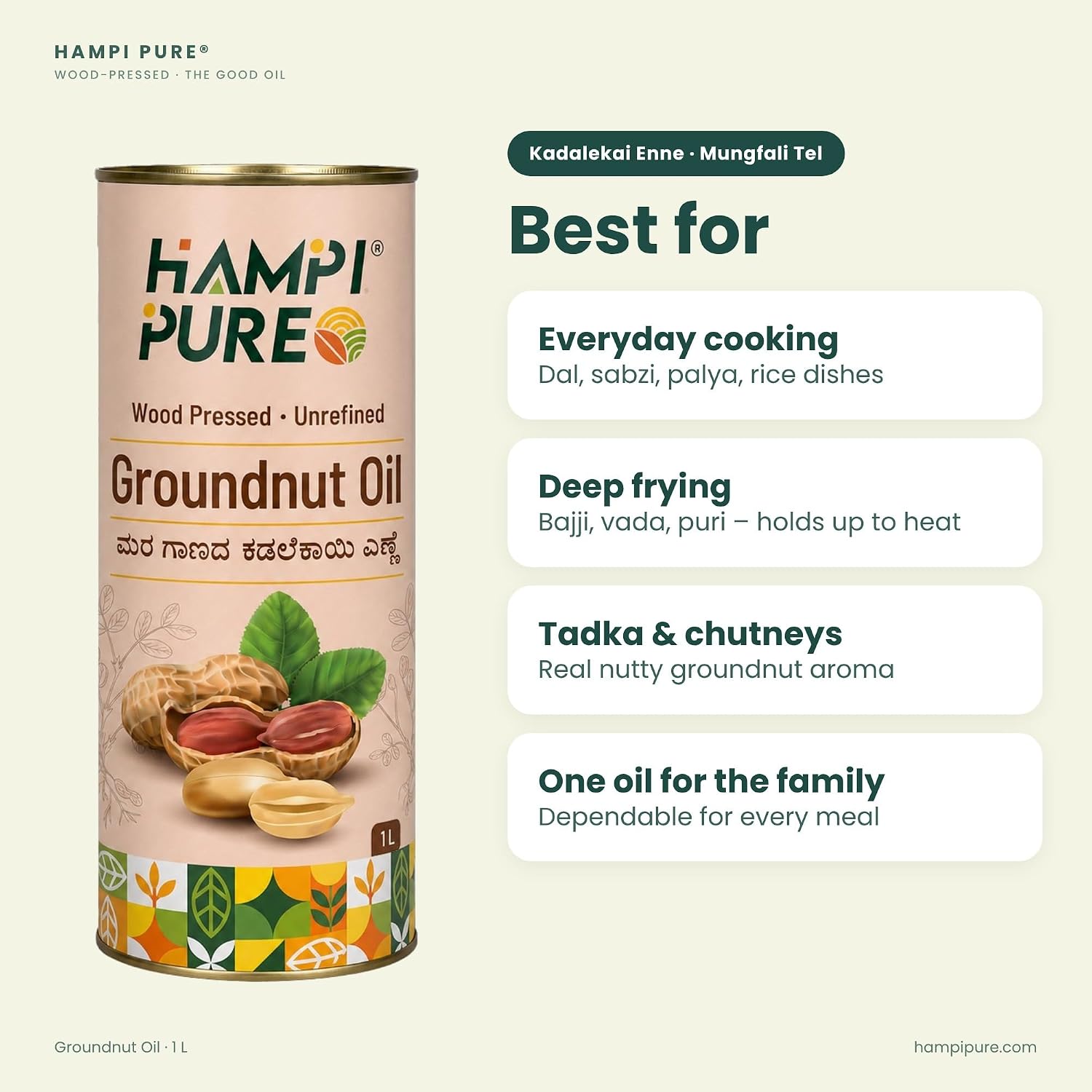
There is no single “best” oil for every Indian kitchen. The right oil depends on what you cook, how hot you cook it, and the flavour you grew up with. Here is a simple guide to choosing – and why many nutritionists suggest rotating two or three unrefined oils through the month.
Quick guide: which oil for which dish
| Oil | Best for | Taste |
|---|---|---|
| Groundnut (kadalekai enne) | Daily cooking, deep frying – bajji, vada, puri | Nutty |
| Sesame / gingelly (ellu enne) | Kuzhambu, puliyogare, pickles, podi | Gentle, nutty |
| Coconut (kobbari enne) | Kerala and coastal dishes, avial, poriyal | Sweet coconut |
| Kachi ghani black mustard | North Indian and Bengali food, achaar | Sharp, pungent |
| Yellow mustard | Everyday sabzi, pickles – milder | Mild mustard |
| Safflower (kusube) | Light everyday meals, weight-conscious kitchens | Very mild |
| Sunflower (surya kanti) | Light sabzis, dosa, shallow frying | Light |
South Indian kitchens
Groundnut and sesame oil are the classics. Use groundnut for frying and everyday palya; use sesame for tempering, kuzhambu and pickles, where its natural antioxidants also help keep pickles fresh. Coastal homes add coconut oil for avial, poriyal and banana chips.
North Indian and Bengali kitchens
Kachi ghani mustard oil is the traditional choice. Heat it until it just starts to smoke and turns lighter in colour, then lower the flame before adding your tadka – this mellows its pungency. If black mustard feels too sharp, start with yellow mustard oil.
For frying
Groundnut oil handles the high heat of Indian deep frying well. Coconut and mustard oil are also stable. For low and medium-heat cooking, lighter oils like safflower and sunflower work well.
Why rotate oils?
Each oil has a different balance of fats – groundnut is rich in MUFA, mustard has plant omega-3, sesame has natural antioxidants. Using two or three unrefined oils through the month gives your family a wider mix. A simple plan: groundnut or sunflower for daily cooking, sesame or mustard for regional dishes, and coconut for festive frying.
How much oil does a family need?
A family of four typically uses 3–4 litres a month. Larger 5 litre packs are the best value for your main oil, with 1 litre packs for the oils you use less often.
Choose unrefined
Whichever oil you pick, choose it unrefined. Wood-pressed oil is made slowly in a wooden ghani with no chemicals, bleaching or deodorising, so it keeps its natural aroma and nutrients. Shop all Hampi Pure® wood-pressed cooking oils – free shipping across India.


