

Cart
0
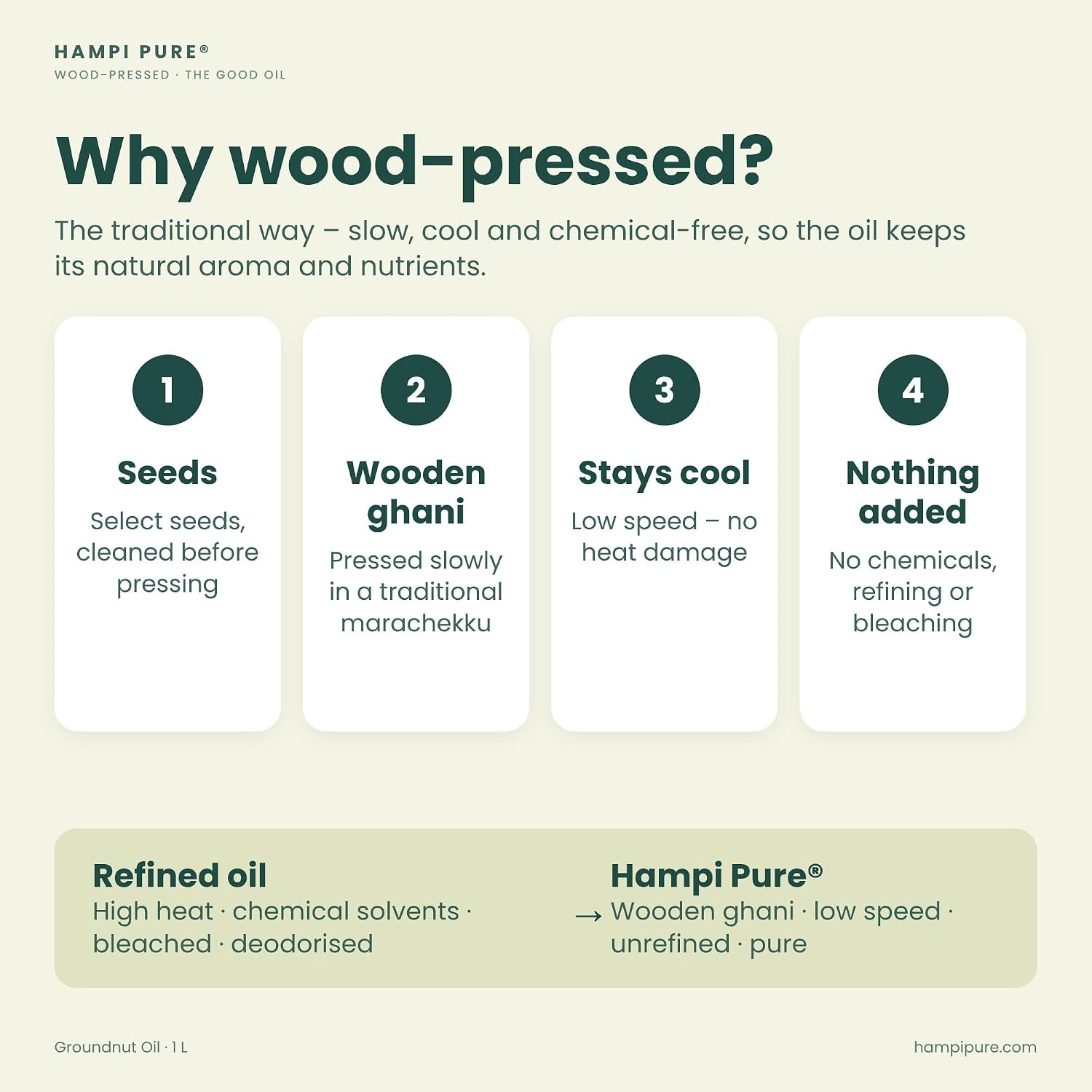
Walk into any supermarket and you will see three kinds of cooking oil: refined, cold-pressed and wood-pressed (also called kachi ghani, chekku or marachekku oil). They can look similar on the shelf, but the way each is made decides what actually ends up in your kadai.
How refined oil is made
Most refined oils are made for high yield and long shelf life. Seeds are crushed at high temperature, and the remaining oil is often pulled out with a chemical solvent (usually hexane). The oil is then bleached to remove colour and deodorised at high heat to remove smell and taste. The result is a clear, odourless oil that lasts long – but much of the natural vitamin E, aroma and antioxidants of the seed is lost along the way.
How wood-pressed oil is made
Wood-pressed oil is made the way Indian homes made it for centuries. Seeds are crushed slowly in a wooden ghani (a mortar and pestle made of wood) that turns at low speed. Because it moves slowly, the oil stays cool, so its natural nutrients, colour and aroma stay in the oil. Nothing is added and nothing is removed – the oil is simply filtered and bottled.
Where does “cold-pressed” fit in?
“Cold-pressed” is a broad label for oil pressed without added heat. Many cold-pressed oils are made in fast steel expellers, which can still warm the oil through friction. Wood-pressed oil is the traditional, slowest form of pressing – which is why many people consider it the purest choice.
Side-by-side
| Refined oil | Wood-pressed oil | |
|---|---|---|
| Pressing | High heat, often solvent extraction | Slow wooden ghani, low speed |
| Chemicals | Hexane, bleaching, deodorising | None |
| Colour & aroma | Removed | Natural, seed-specific |
| Natural vitamin E & antioxidants | Largely lost | Retained |
| Sediment | None | A little natural sediment is normal |
Is wood-pressed oil healthier?
All oils are fats, so the amount you use matters most. But for the oil you do use, an unrefined oil that keeps its natural antioxidants and has not been treated with chemicals is a better everyday choice. Many families also find that because wood-pressed oil has more flavour, they end up using a little less.
How to spot real wood-pressed oil
- Smell: it should smell of the seed – nutty groundnut, sharp mustard, sweet coconut.
- Colour: natural shades, not crystal clear.
- Sediment: a thin layer at the bottom is normal for unrefined oil.
- Coconut oil turns solid below about 24°C – a sign of purity.
Making the switch
You do not need to change your recipes – use wood-pressed oil exactly like your current oil. Start with the oil you use most: groundnut oil for frying, sesame (gingelly) oil for South Indian cooking, or kachi ghani mustard oil for North Indian dishes. Browse all Hampi Pure® wood-pressed cooking oils.
Hampi Pure® – The Good Oil. Trusted by 3000+ happy families.


