

Cart
0
Summer brings raw mangoes, lime and green chillies – and with them, the annual pickle ritual. The oil you use is not just a cooking medium; it is what keeps your achaar safe and tasty for months.
Why oil matters in pickles
Oil forms a layer over the pickle that keeps air and moisture out. It also carries the flavour of spices. A good pickle oil must be stable, flavourful and used generously.
Mustard oil: the North Indian classic
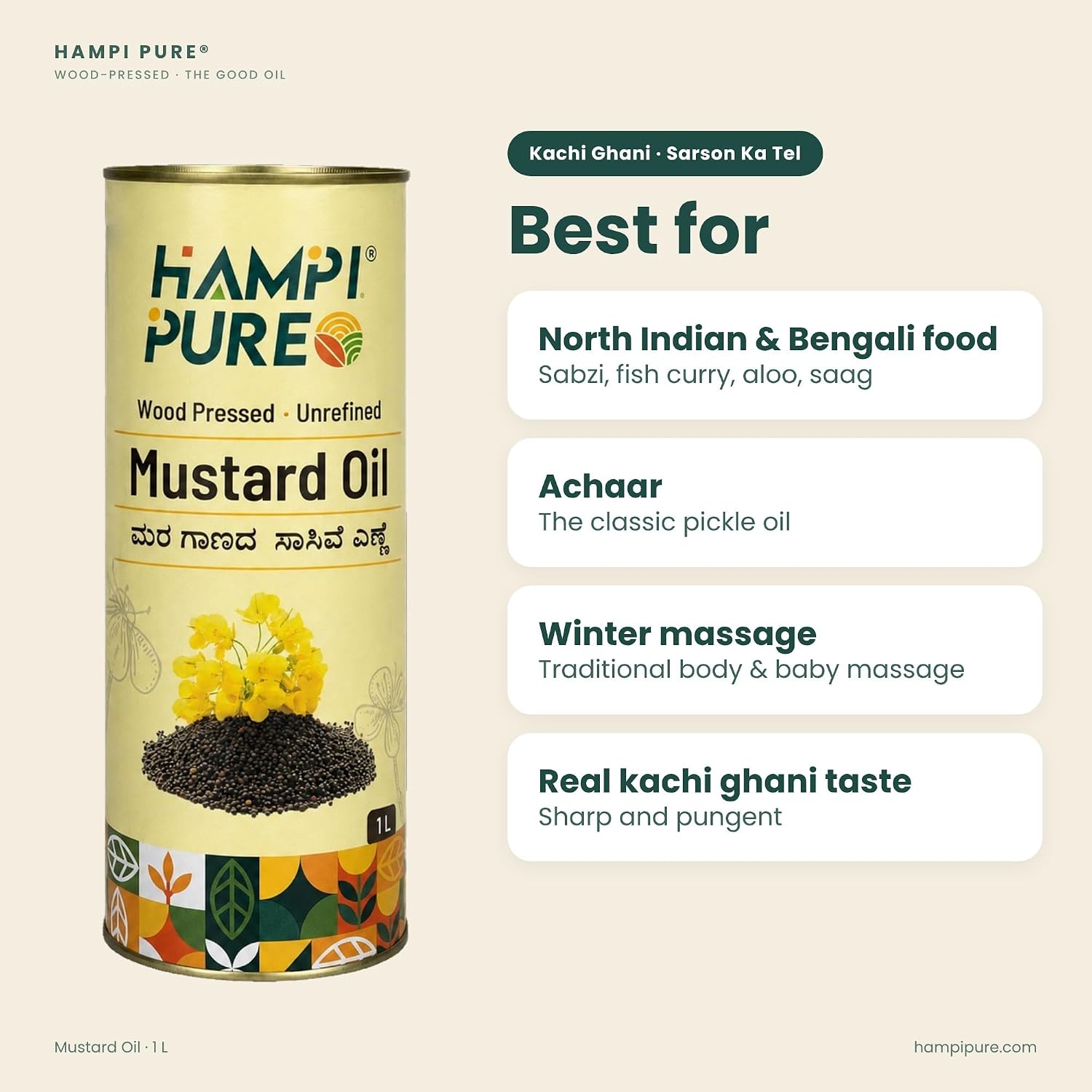
Kachi ghani black mustard oil is the traditional oil for aam ka achaar, lime pickle and mixed vegetable pickle in Punjab, UP, Bihar and Bengal. Its pungency complements mustard seed, fennel and nigella. For a milder taste, try yellow mustard oil.
Tip: heat mustard oil until it smokes lightly, then let it cool completely before pouring over the pickle.
Sesame oil: the South Indian favourite
In Tamil Nadu, Karnataka and Andhra, gingelly (sesame) oil is the pickle oil of choice – for avakaya, mango thokku and lemon pickle. Its natural antioxidants, sesamol and sesamin, make it one of the most stable oils.
Groundnut oil: everyday pickles
Gujarati and Maharashtrian homes often use groundnut oil for chhundo, methia keri and quick pickles.
Pickle-making tips
- Dry the jar and all vegetables completely in the sun – water is the enemy of pickles.
- Use a clean, dry spoon every time.
- Keep the pickle covered with a layer of oil at all times.
- Store in glass or ceramic jars, away from direct sunlight once matured.
How much oil?
A rough guide: about 250–300 ml of oil per kilo of cut mango, plus extra to top up as the pickle absorbs it.


