

Cart
0
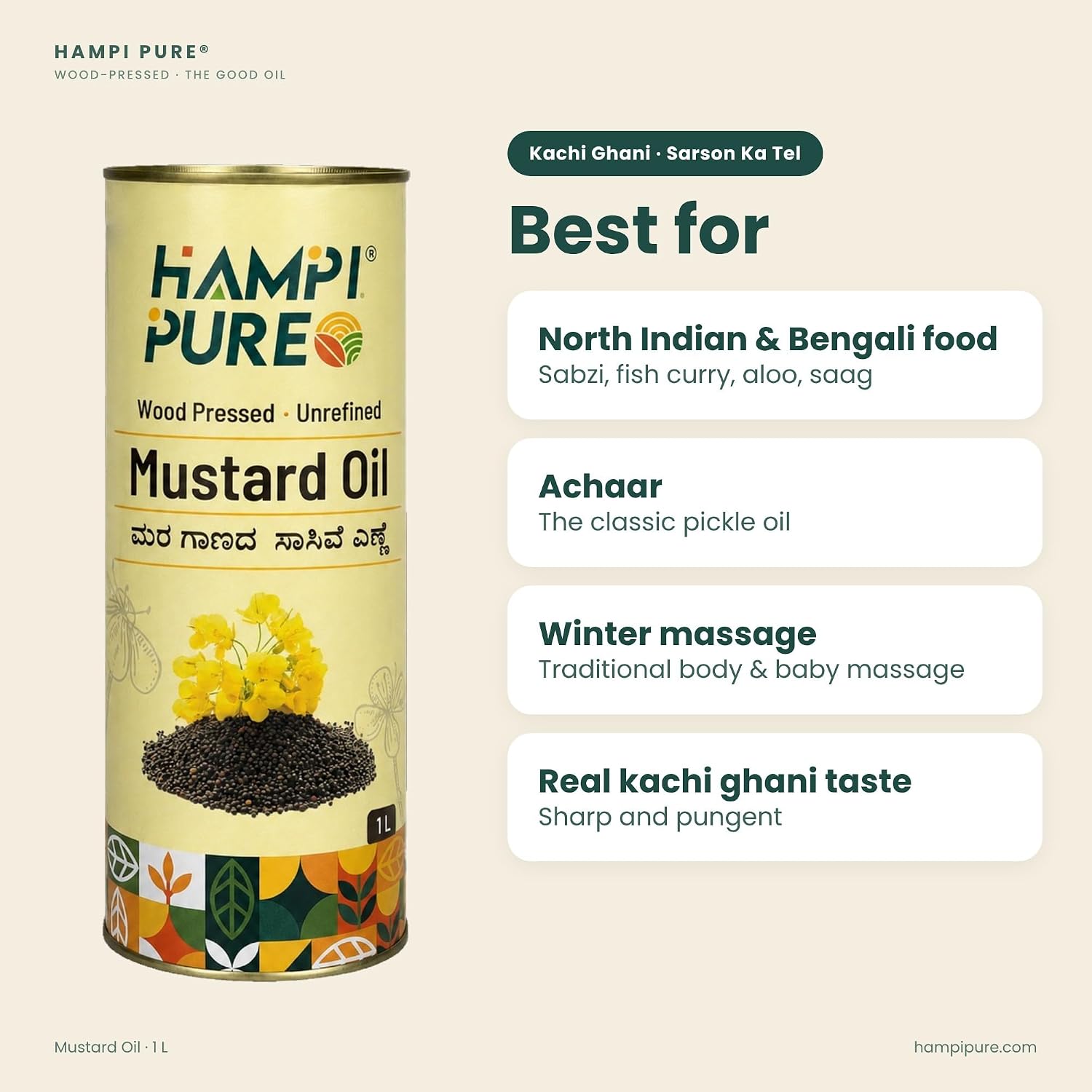
Few oils divide opinion like mustard oil. Some families cannot cook without it; others are put off by the sharp smell. Here is what makes kachi ghani mustard oil special, and how to get the best out of it.
What does “kachi ghani” mean?
Kachi ghani means the seeds are pressed raw and slowly in a traditional ghani, without high heat. The oil keeps its natural golden colour and its famous pungency – unlike refined mustard oil, which is processed until most of that character is gone.
Why does it sting the nose?
That sharp, eye-watering kick comes from natural compounds in mustard seeds (allyl isothiocyanate). It is the sign of real mustard oil. Heating it correctly before cooking mellows it.
Benefits of kachi ghani mustard oil
- Plant omega-3: it is one of the few common Indian cooking oils that naturally contains omega-3 (ALA).
- Good fat balance: rich in monounsaturated fats (MUFA) with a good omega-3 to omega-6 ratio.
- High-heat friendly: handles frying and tadka well.
- Traditional uses: pickles, winter body massage and baby massage in many North Indian homes.
How to cook with it
- Heat the oil until it just starts to smoke and turns slightly lighter in colour.
- Lower the flame and let it cool for a few seconds.
- Add your tadka – mustard seeds, jeera, curry leaves – and cook as usual.
Use it raw only in small amounts, as in pickles, chokha and some chutneys.
Black vs yellow mustard oil
| Black mustard oil | Yellow mustard oil | |
|---|---|---|
| Taste | Sharp, strong | Milder, softer |
| Best for | Bengali and North Indian food, fish curry, achaar | Everyday sabzi and dal, people new to mustard oil |
| Pickles | Classic choice | Popular choice |
Storage
Keep it in a cool, dark place with the cap closed. Best used within 12 months of packing.
Try it
Shop Hampi Pure® kachi ghani black mustard oil or the milder yellow mustard oil – both wood-pressed and unrefined. New to wood-pressed oils? Read wood-pressed vs refined oil.


