

Cart
0
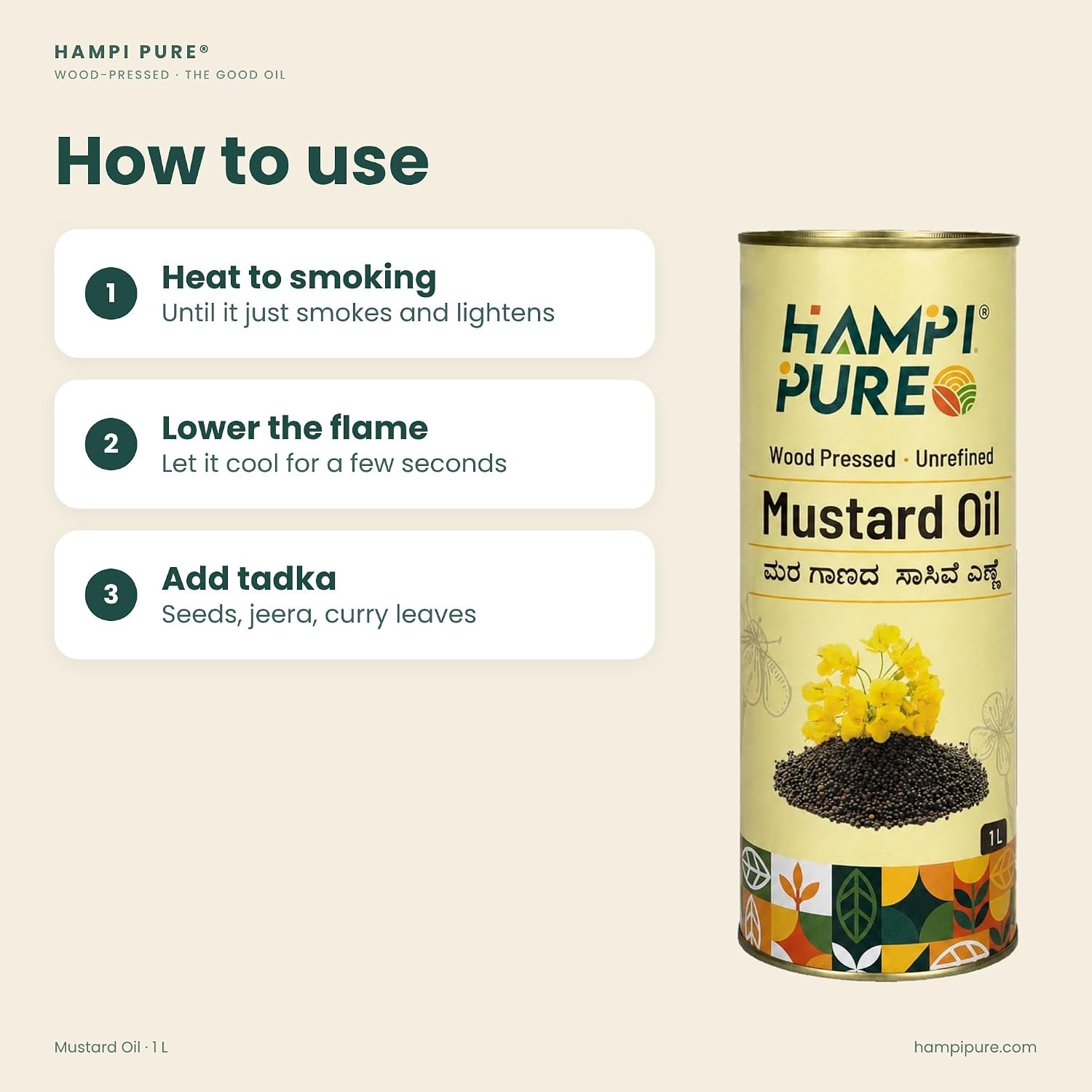
The smoke point is the temperature at which oil starts to smoke. Past this point, oil begins to break down, losing flavour and nutrients and forming unwanted compounds. Knowing roughly where each oil stands helps you cook better.
Why unrefined oils are different
Refined oils are stripped of natural particles, so they often have a higher smoke point on paper. Unrefined, wood-pressed oils keep natural compounds that can start to smoke a little earlier – but they also keep antioxidants that help protect the oil. In everyday Indian cooking, unrefined oils used sensibly work very well.
A practical guide
| Oil | Best heat | Good for |
|---|---|---|
| Groundnut | High | Deep frying, tadka, sabzi |
| Coconut | Medium-high | Frying, coastal curries, tadka |
| Mustard (kachi ghani) | High (heat to light smoke first) | Frying, North Indian curries, achaar |
| Sesame (raw) | Medium-high | Tempering, South Indian dishes, pickles |
| Safflower | Medium | Everyday light cooking, shallow frying |
| Sunflower | Low-medium | Light sabzi, dosa, shallow frying |
| Flaxseed / walnut | No heat | Drizzling, salads, chutneys |
Signs your oil is too hot
- Continuous heavy smoke (except the brief smoke you want with mustard oil)
- A sharp, acrid smell
- Food browning on the outside but raw inside
Tips
- Heat oil on medium, not full flame.
- Don’t leave an empty kadai of oil heating unattended.
- Match the oil to the method – save delicate oils like flaxseed for no-heat use.
Browse wood-pressed cooking oils.


