

Cart
0
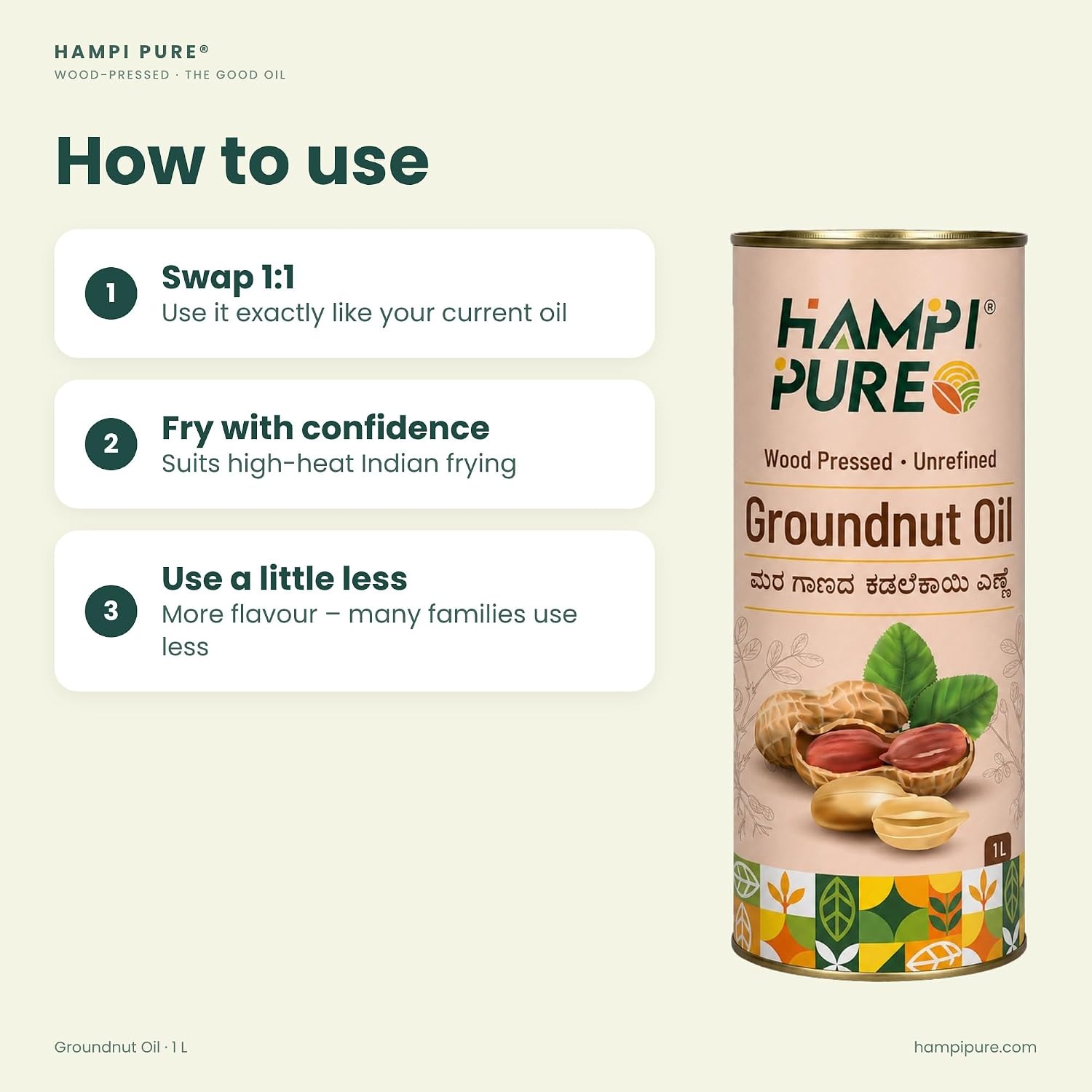
Deep frying is part of Indian cooking – from morning puri to evening pakoda. The right oil gives crisp food, a clean taste and holds up to the heat without breaking down quickly.
What makes a good frying oil
- Heat stability: oils rich in saturated or monounsaturated fat break down more slowly.
- Flavour: a pleasant taste that suits the dish.
- Value: frying uses a lot of oil.
The top choices
- Groundnut oil: the all-rounder. Rich in MUFA, stable, and its light nutty flavour suits most snacks.
- Coconut oil: very stable due to its saturated fat. Perfect for banana chips and Kerala snacks.
- Mustard oil: traditional in the North and East for fish fry, pakoda and puri. Heat until it smokes lightly before frying.
Better for lighter cooking
Light oils like sunflower and safflower are best kept for low to medium-heat cooking and shallow frying rather than long deep-frying sessions.
How to fry for less oily food
- Get the oil hot enough before adding food. Cold oil soaks into food. Test with a small piece – it should rise and sizzle steadily.
- Don’t crowd the kadai. Too much food at once drops the temperature.
- Keep batter thick enough to coat without dripping.
- Drain on a steel colander for crispness, then on paper.
Reusing frying oil
Strain after use and reuse once more within a day or two for a sabzi or tadka. Discard oil that is dark, thick, foamy or smells off. Read more in can you reuse frying oil?


