

Cart
0
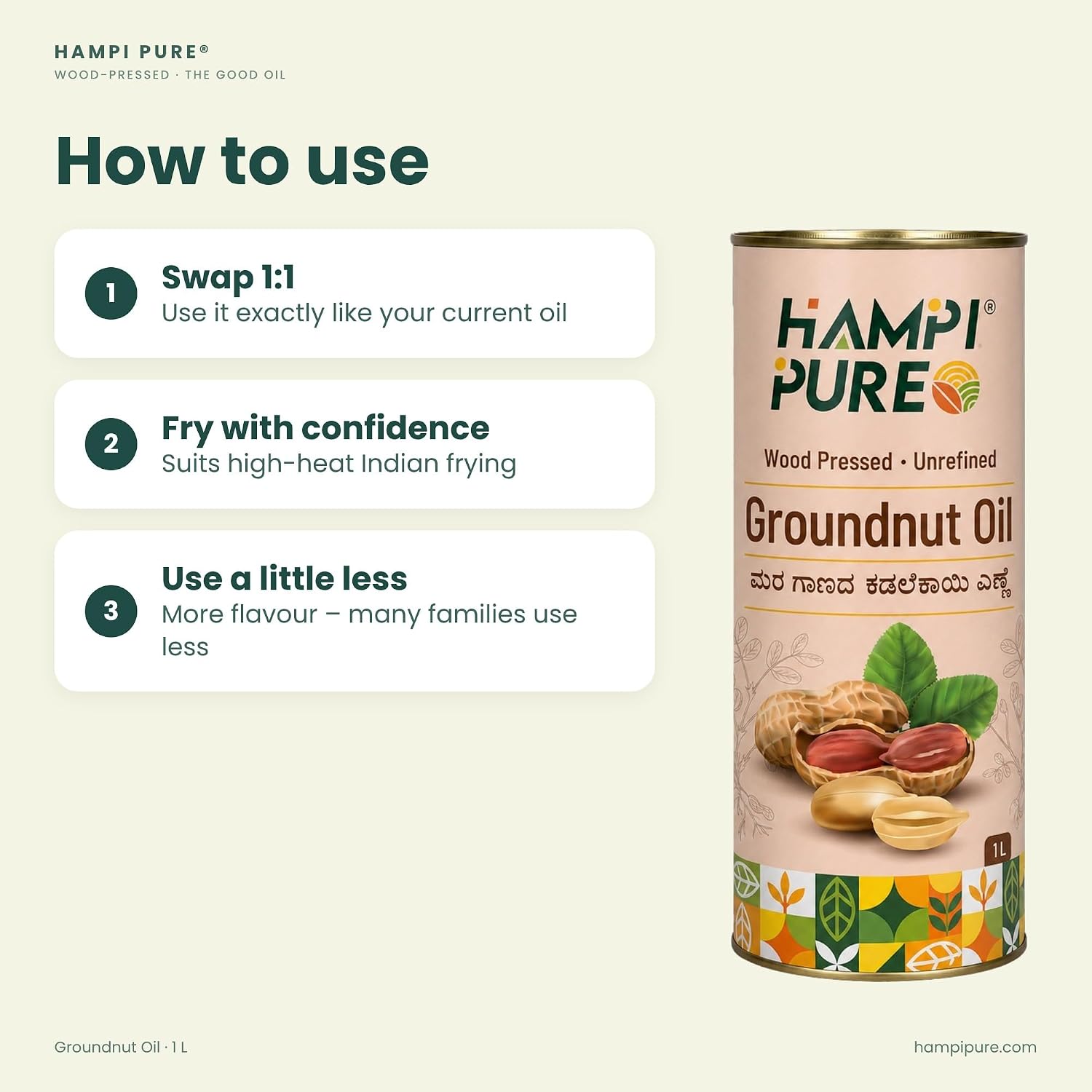
Many families decide to move away from refined oil but find it hard to stick with the change. Here is a simple, practical plan.
Step 1: Start with the oil you use most
Look at your kitchen. Most homes use one main oil for 80% of cooking. Replace that one first – usually groundnut, safflower or sesame in the South, mustard in the North.
Step 2: Expect a change in taste – for the better
Refined oil is deodorised and tastes of nothing. Wood-pressed oil tastes of its seed. Groundnut oil smells nutty, mustard is sharp, coconut is sweet. Most families get used to it in a week and then find refined oil bland.
Step 3: Use a little less
Because wood-pressed oil has more flavour, many families naturally use less. That also helps balance the slightly higher price.
Step 4: Don’t change your recipes
Use wood-pressed oil exactly as you used refined oil – for tempering, frying and sabzi. Groundnut, coconut and mustard oil handle deep frying well.
Step 5: Store it right
- Keep oil away from the stove and direct sunlight.
- Close the cap after every use.
- A little sediment at the bottom is normal – it is not a defect.
Step 6: Add a second oil
Once the first switch is done, add a second oil for variety – for example sesame for South Indian dishes or mustard for pickles. Rotating oils gives a wider mix of fats.
Managing the budget
- Buy the 5 litre pack of your main oil – it is the best value.
- Use 1 litre packs for oils you use less often.
Start with Hampi Pure® wood-pressed cooking oils – free shipping across India.


