

Cart
0
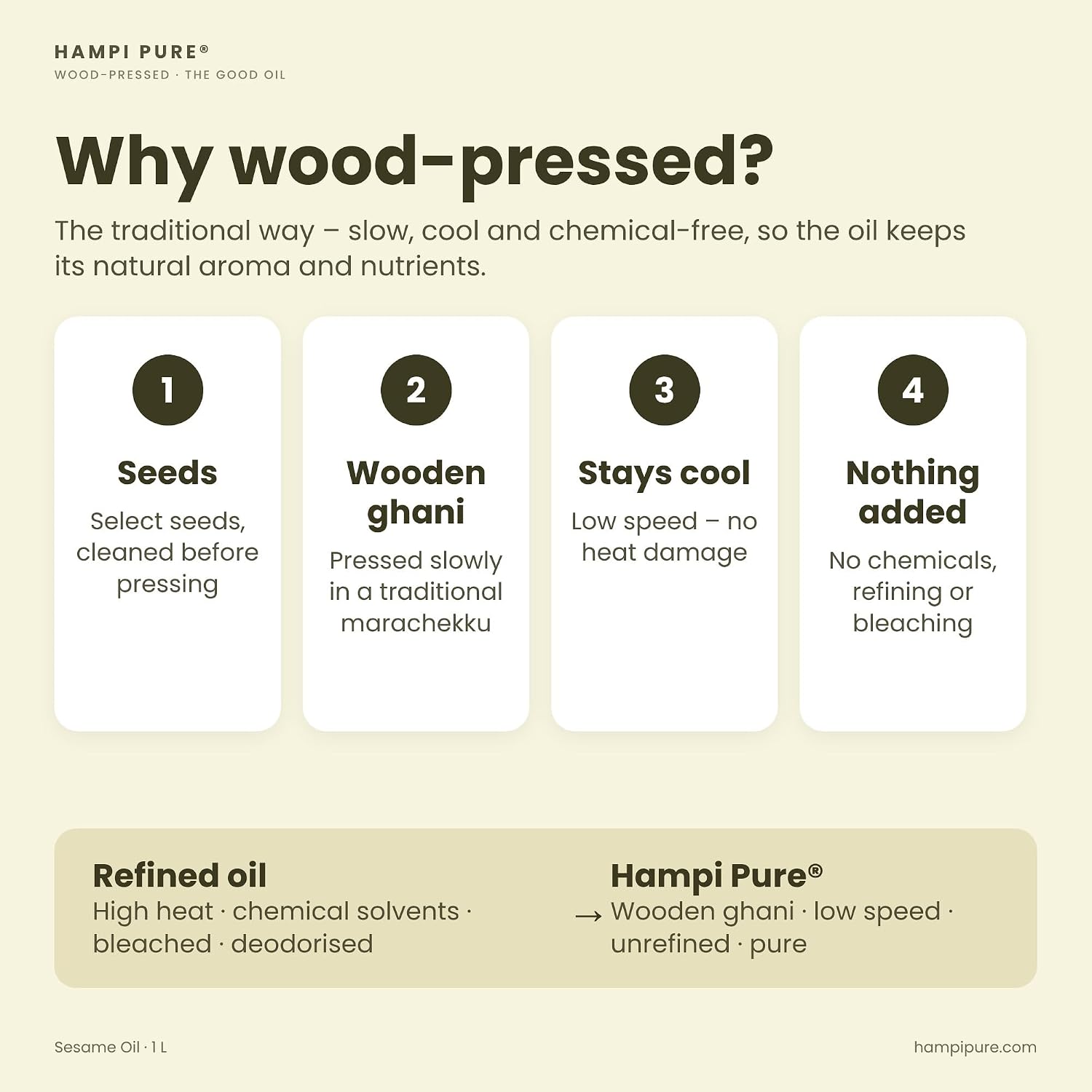
Walk through markets in different states and you will hear many names for traditionally made oil. They mostly describe the same idea: seeds pressed slowly, without chemicals, using a traditional press.
The names, region by region
- Kachi ghani (Hindi, North India): “kachi” means raw – seeds pressed raw, without high heat. Most often used for mustard oil.
- Kolhu (Hindi/Punjabi): the traditional oil press itself.
- Chekku (Tamil): the press. “Chekku ennai” means oil from the press.
- Marachekku (Tamil): “maram” means wood – so this is specifically a wooden press.
- Gana / ganada enne (Kannada): oil from the traditional press.
- Wood-pressed: the English term for oil from a wooden ghani.
What about “cold-pressed”?
It is a broad label meaning no external heat was used. It can cover a wooden ghani, but it is also used for fast steel expellers. If you want the traditional method specifically, look for “wood-pressed”, “marachekku” or “kachi ghani”.
What “refined” and “filtered” mean
- Refined: processed with heat and often chemicals, then bleached and deodorised.
- Filtered: pressed and filtered, but the pressing method varies – check the label.
- Blended: a mix of two or more oils. The label must state the proportion.
How to read an oil label
- Look for the FSSAI licence number.
- Check the pressing method and the word “unrefined”.
- Read the ingredients – a single-seed oil should list just one seed.
- Note the packing date and best-before – fresh oil tastes better.
All Hampi Pure® oils are wood-pressed and unrefined. Shop the range.


