

Cart
0
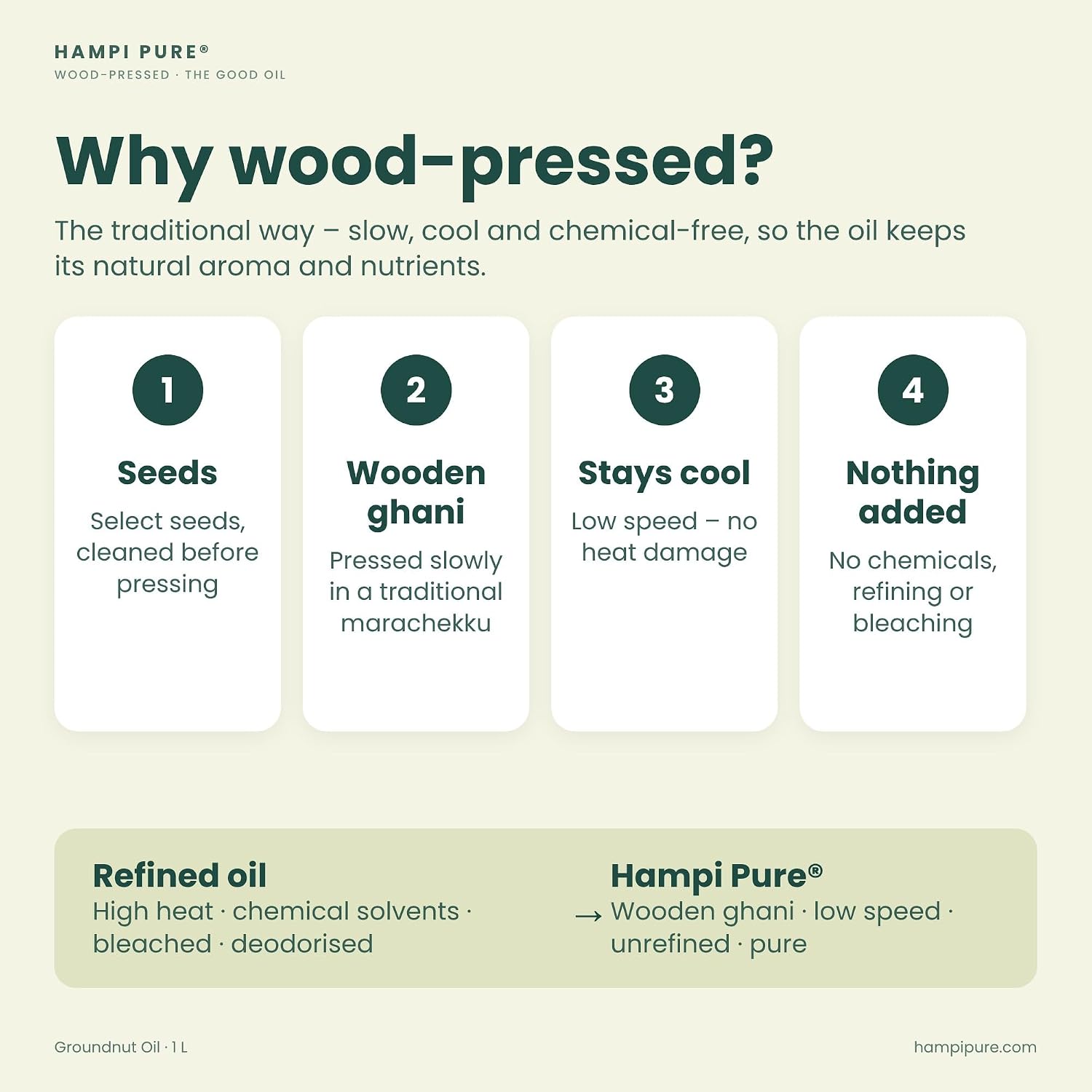
Before electric expellers and refineries, every village in India had a ghani – a large wooden mortar and pestle that pressed oil slowly from seeds. In Tamil it is called marachekku, in Kannada gana, in Hindi kolhu or kachi ghani. Wood-pressed oil is made the same way today.
The parts of a ghani
- The mortar (ural): a deep wooden vessel, often made of seasoned hardwood, that holds the seeds.
- The pestle (ulakkai): a heavy wooden beam that turns inside the mortar, crushing the seeds against its walls.
- The drive: traditionally a bullock walked in circles to turn the pestle. Today a slow motor does the same job at the same low speed.
How the oil is pressed
- Cleaned, sun-dried seeds are fed into the mortar.
- The pestle turns slowly – around 12–15 rotations a minute – crushing the seeds.
- A little jaggery or water is sometimes added, as per tradition, to help the oil separate from the seed cake.
- Oil collects at the bottom and is drained out, then left to settle and filtered through cloth.
Why slow matters
Fast steel machines generate friction and heat. A wooden ghani turns slowly and wood does not conduct heat like metal, so the oil stays cool. That helps the oil keep its natural aroma, colour, vitamin E and antioxidants.
What you get – and what you don’t
Wood-pressed oil is not bleached, deodorised or treated with solvents. It smells of the seed, has natural colour and may have a little sediment at the bottom. The seed cake that remains (khali / pinnakku) is a valued cattle feed and natural fertiliser, so nothing is wasted.
Is it more expensive?
Yes, a little. A ghani extracts less oil from the same seeds than a chemical process, and it is slower. But you get oil the way it was meant to be. Explore Hampi Pure® wood-pressed cooking oils.


