

Cart
0
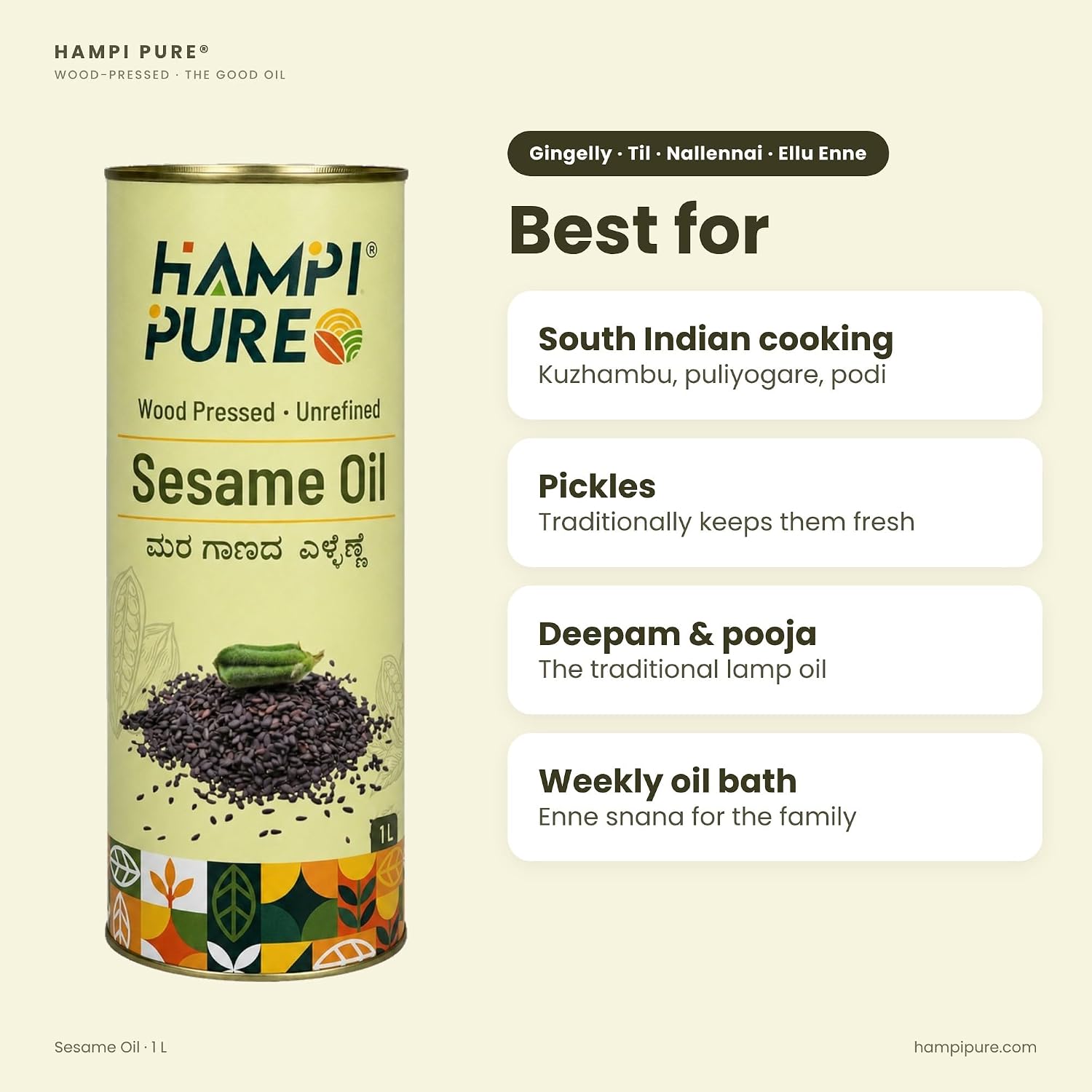
Sesame oil goes by many names – til ka tel, ellu enne, nallennai, nuvvula nune, gingelly oil. In South India it is so central that “nallennai” literally means “good oil”.
What makes sesame oil special
- Natural antioxidants: sesame contains sesamol and sesamin, compounds that make the oil very stable and slow to go rancid.
- Balanced fats: a good mix of MUFA and PUFA.
- Vitamin E: naturally present in unrefined sesame oil.
Raw vs roasted sesame oil
The dark, strongly flavoured sesame oil used in Chinese and Korean cooking is made from roasted seeds. Indian gingelly oil is pressed from raw seeds – light golden, with a gentle nutty flavour suitable for everyday cooking.
Kitchen uses
- Tempering for kuzhambu, sambar and rasam
- Puliyogare, tamarind rice and lemon rice
- Drizzling over idli podi and hot rice
- Pickles – its stability keeps them fresh for months
Beyond the kitchen
- Oil bath: the traditional Saturday and Diwali enne snana.
- Massage: warming and nourishing, especially in winter.
- Deepam: the preferred oil for lighting lamps in many temples and homes.
- Oil pulling: the classic Ayurvedic oil for gandusha.
Choosing sesame oil
Look for unrefined, wood-pressed oil from raw sesame seeds with nothing added. Some cheaper “gingelly” oils are blended – check the label. Shop Hampi Pure® wood-pressed sesame oil in 1, 2 and 5 litres, or the 200 ml bottle for massage.


